
Frozen Pipes and Cottage Water Damage Restoration
A frozen pipe that splits in an unheated cottage or an exterior wall can run for hours, or for weeks if nobody is there to hear it. DKI Simcoe Muskoka extracts the water, dries the structure to measured readings, deals with any mould and rebuilds, for cottages, homes and businesses across Muskoka, Simcoe County and Parry Sound. Our emergency line, 1-800-228-7739, is answered 24 hours a day.
Why Pipes Freeze and Burst in Cottage Country
Water expands as it freezes, and pressure builds between the ice and a closed tap until a pipe or fitting gives way. The split often happens away from the ice itself, and nothing leaks until the thaw. That is why a burst pipe is so often found days later, when the temperature climbs and water starts to flow.
Cottages are most at risk because they sit empty and cold for months: lines in crawlspaces and bunkies, lake-water intake lines, and pumps and pressure tanks in unheated pump houses. In year-round homes it is pipes in exterior walls, unheated garages and rooms over garages, and outdoor taps never shut off from inside.
Power outages during ice storms are a common trigger. A furnace that stops for a day in January can freeze the pipes in a house that has never had a problem.
What to Do When You Find a Burst Pipe
Whether you find it at spring opening or in the middle of the night, these four steps limit the damage and protect your insurance claim.
1. Shut Off the Water
Close the main shut-off valve, or turn off the well or lake pump at the breaker. At a cottage, open a low tap to relieve the pressure in the lines.
2. Make the Power Safe
Turn off breakers for wet areas only if you can reach the panel from a dry spot. Never walk through water near outlets, cords or appliances.
3. Photograph and Protect
Photograph the water, the split pipe and damaged belongings, then move furniture, rugs and electronics somewhere dry. Leave sagging ceilings alone.
4. Call Your Insurer and Us
Report the loss to your insurer, then call 1-800-228-7739. We extract the water, start drying and document everything for your adjuster.
How We Dry Out and Repair the Damage
Water from a burst supply line is clean when it starts, but after a day or two it picks up contaminants from floors and building materials, and in a cottage that sat for weeks, mould may already be growing. We assess the water and how long it has been there before deciding what can be dried in place and what has to come out.
Water Extraction
Standing water is pumped and extracted from floors, carpets and crawlspaces as soon as the source is off.
Controlled Tear-Out
Soaked insulation, drywall and flooring that can’t be dried are removed, so the cavities behind them can dry.
Structural Drying
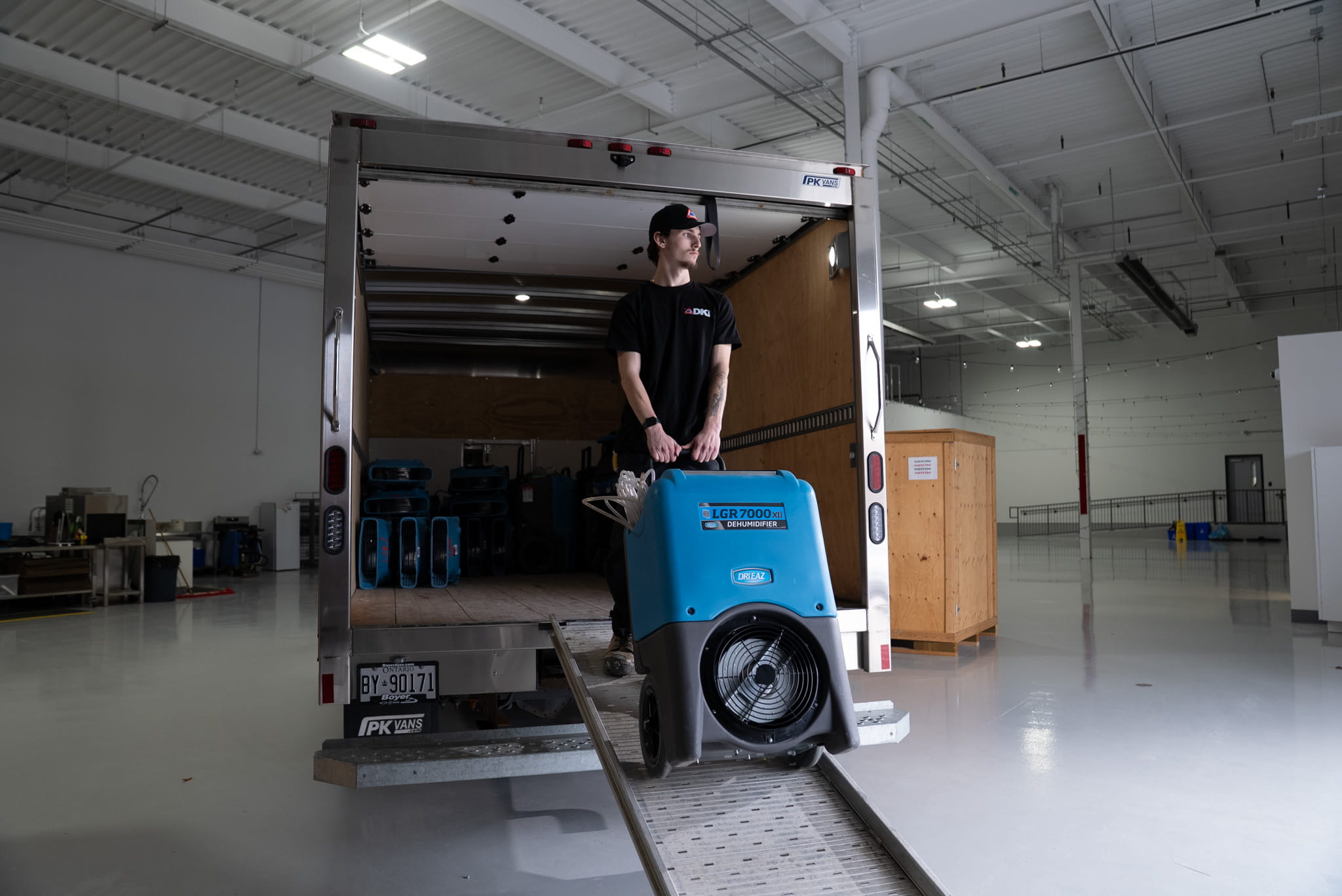
Air movers and dehumidifiers run until daily moisture readings show every material has reached its dry standard.
Mould Inspection
Where water sat for days or weeks, we check behind walls and under floors and remove any mould under containment.
Contents Care
Furniture, rugs and belongings are moved, dried or packed out for cleaning, with an itemized list for your claim.
Repairs and Rebuild
Our own crews replace drywall, insulation, flooring, cabinets and trim. A licensed plumber repairs the pipe itself.
Closing the Cottage: Freeze-Protection Checklist
Most frozen-pipe claims we see at cottages trace back to how the place was closed. Before you leave for the season:
Shut Off the Water and Pump
Close the main water supply and switch the pump off at the breaker.
Drain and Blow Out the Lines
Drain every line, then blow them out with compressed air, including the lake intake and outdoor taps.
Empty the Tank and Heater
Drain the pressure tank, water heater and pump, following the manufacturer’s instructions.
Protect Traps and Toilets
Pour non-toxic RV antifreeze into sink traps, toilets and floor drains so they can’t freeze and crack.
Watch the Temperature
If you keep the heat on, add a temperature alarm that alerts you to a power or furnace failure.
Schedule Regular Checks
Have a caretaker or neighbour check the property, and keep a record of each visit.
Check your policy before you close up. Many insurers require the heat to be kept on, the water drained, or the property checked at set intervals while it is vacant.
Spring Opening: Signs of a Hidden Leak
A Musty Smell
Damp, earthy odours usually mean water has been sitting somewhere for a while, often under floors or behind walls.
Stains, Bubbling or Swelling
Ceiling stains, bubbling paint, and swollen baseboards, cabinets or laminate point to a leak above or behind them.
Soft or Cupped Floors
Floors that feel spongy, or hardwood boards that have cupped, have soaked up water from below.
A Pump That Won't Stop
If the pump keeps running or pressure won’t build when you turn the water on, shut it off. A line has likely split.
Does Insurance Cover Frozen Pipes at a Cottage?
Sudden water damage from a pipe that freezes and bursts is covered by many Ontario home and seasonal policies, but cottages come with conditions. Policies often require the heat to be maintained, the plumbing drained and shut off, or the property checked by a responsible person at set intervals while it is vacant. If those conditions were not met, a claim can be reduced or denied.
Report the damage as soon as you find it, and keep your closing records, caretaker logs and receipts. We document the source of the water, how far it spread and what had to be removed, with photos and moisture readings, so your adjuster has a clear file.
Not sure what your policy requires? Your broker can confirm the vacancy conditions on your own cottage policy.
Frozen Pipe Water Damage Repair Near You
Most of our frozen-pipe calls come from cottages in Muskoka, around Gravenhurst, Bracebridge, Huntsville and Parry Sound, and from homes and cottages around Lake Simcoe and Georgian Bay in Orillia, Oro-Medonte, Barrie, Innisfil, Midland, Penetanguishene, Wasaga Beach and Collingwood.
Related services: water damage restoration, mould removal, ice dam and roof leak repair and sewer backup cleanup. Call 1-800-228-7739 any time.
DKI - Simcoe Muskoka Offers...
At DKI - Simcoe Muskoka, we know that dealing with property damage is overwhelming—that’s why our crews are ready to respond 24/7, every day of the year. With roots going back to 1961 and IICRC-certified technicians, we bring the knowledge, speed, and care needed to restore your home or business efficiently. From the moment you call, a dedicated Project Manager will guide you through the process, keeping you informed every step of the way. Our team is committed to delivering high-quality results while providing the compassion and support you need to get back on your feet as quickly as possible.
Quick Mobilization
24/7 emergency restoration and board-up services available 365 days a year.
Expertise
Fully trained and certified IICRC (Institute of Inspection, Cleaning and Restoration Certification) staff, backed by a company that has been building and restoring since 1961.
Strong Communication
A project Manager assigned to your claim from start to finish, updating you throughout the process.
Quality Assurance
Making sure you are happy with the final result of the work done and standing behind the work we do.
Compassionate Team
We understand how hard the situation is and our team will do what we can to get you back to normal sooner.
Frozen Pipe and Cottage Water Damage Questions
What homeowners and cottage owners ask us most about frozen pipes, burst pipes and winter water damage.
How do I know if my pipes are frozen?
Little or no water from a tap on a cold day is the first sign, sometimes with frost on an exposed pipe or a bulge in the line. Shut off the main valve before you try to thaw anything, so a hidden split doesn’t start leaking the moment the ice melts.
How do I thaw a frozen pipe safely?
Open the tap the pipe feeds, then warm the frozen section gently with a hair dryer, warm towels or a space heater kept well away from anything flammable, working from the tap back toward the frozen spot. Never use an open flame or a torch. If you can’t find the frozen section, or it is inside a wall, call a licensed plumber.
Should I leave the heat on or drain the cottage for winter?
Draining the system and blowing out the lines is the most reliable protection. If you keep the heat on instead, don’t rely on it alone: a power failure or furnace fault can freeze a cottage in a day or two, so add a temperature alarm that alerts you remotely. Check what your insurance policy requires for vacant properties either way.
How long does it take to dry out water damage from a burst pipe?
Most structures need three to five days of drying once the standing water is removed. A cottage where water ran for weeks can take longer, because subfloors, framing and insulation are saturated and some materials have to come out. We take moisture readings every day and finish when the materials are dry, not on a fixed schedule.
Will there be mould if the leak ran all winter?
Often, yes, once the building warms up in spring. Cold slows mould down, but a cottage that warms up after weeks of hidden water gives it everything it needs. We check behind walls and under floors with moisture meters and remove mould under containment wherever we find it.
Can you help if we are not at the cottage?
Yes. Many cottage owners live hours away. We can work with your caretaker or a neighbour to get access, and we send photos and progress updates so you can follow the work and share them with your insurer.
Have An Emergency?
Call Us Right Away
Emergency Line
1-800-228-7739